
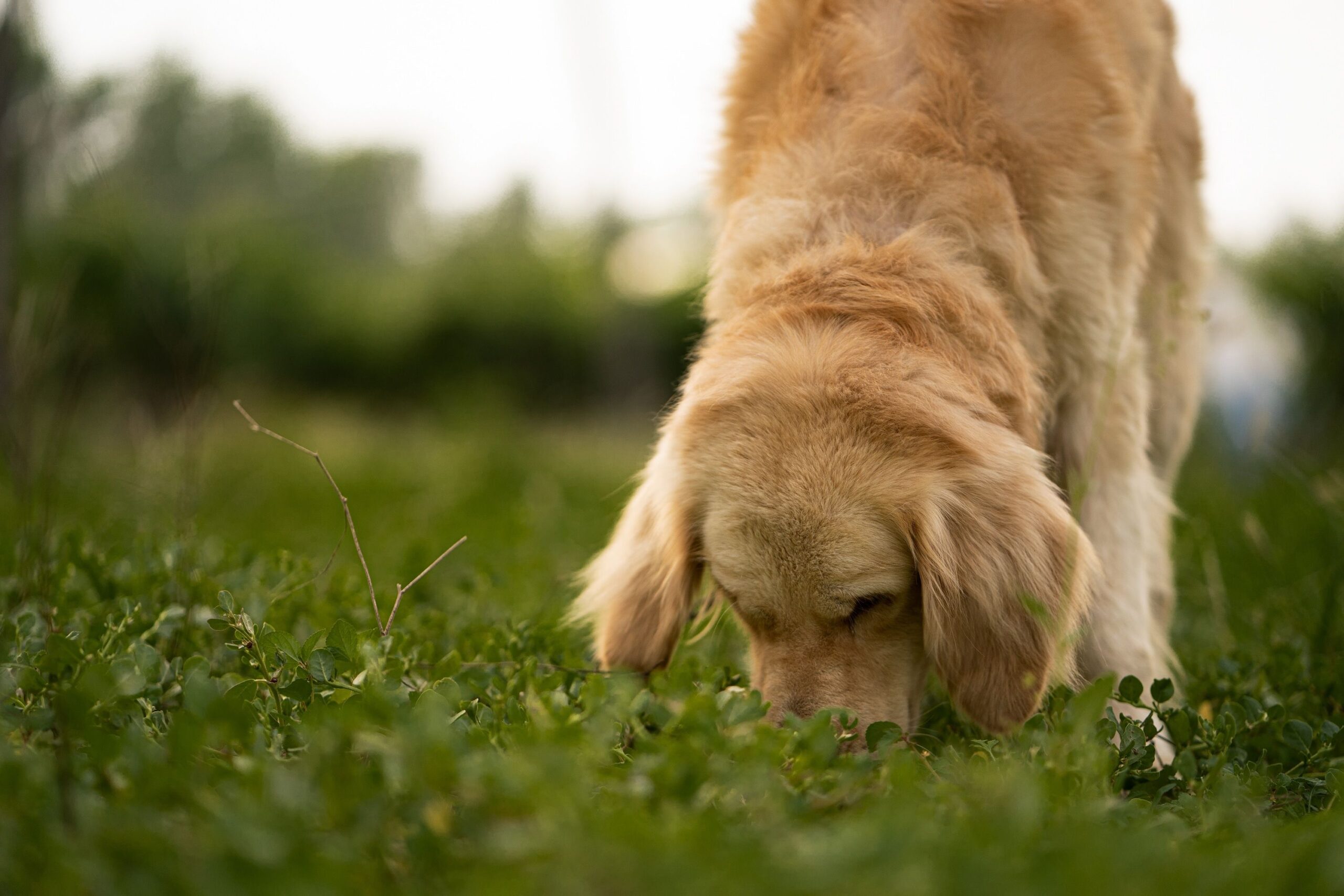
Does your dog stop to sniff every tree, patch of grass, and suspicious-looking leaf when you’re out for a walk?
If you’ve ever found yourself standing at the end of a leash thinking, We have barely made it down the street, you’re certainly not alone.
But here’s something worth remembering: while you’re focused on getting from one place to another, your dog is busy discovering an entire world you can barely detect.
That familiar patch of grass might hold traces of another dog’s visit, an interesting trail left by a passing animal, or simply a smell that’s too good to ignore.
And giving your dog time to explore those scents can turn an ordinary walk into something much more interesting.
What Exactly Is a Sniff Walk?
A sniff walk, sometimes called a sniffari, is a walk where your dog gets more opportunities to explore with their nose.
Rather than focusing on covering a certain distance or maintaining a brisk pace, you allow your dog to stop, investigate interesting smells, and enjoy their surroundings.
Think of the difference between rushing through a museum and having time to look at the exhibits you’re actually interested in.
For your dog, the neighborhood is full of those exhibits. They just happen to be mostly invisible to us.
And the best part? You don’t need special equipment, an elaborate destination, or an entire afternoon to make it happen.
Why Sniffing Matters to Dogs
Dogs rely heavily on their sense of smell to understand the world.
They gather information about other animals, investigate unfamiliar places, and explore their surroundings through scents that we might not notice at all.
This makes sniffing a useful form of mental enrichment. VCA Animal Hospitals describes sniff walks as a way to focus on the scents your dog discovers rather than the distance traveled.
Allowing your dog to investigate their environment can give them opportunities to engage in natural behavior, make small choices, and enjoy a different kind of activity.
That doesn’t mean a leisurely sniff walk should replace every regular walk.
Dogs still need appropriate physical exercise, and their individual needs depend on their age, health, and activity level.
But there’s room for both.
Some days might call for a longer walk with plenty of movement. On others, a slower outing with extra sniffing opportunities might be exactly what your dog enjoys.
How to Give Your Dog Their First Sniff Walk
1. Choose Somewhere Calm and Familiar
You don’t need to find a forest or drive to a special dog park.
A quiet neighborhood, a familiar walking path, or a peaceful park can work perfectly well.
The important thing is choosing somewhere you can safely allow your dog a little freedom to investigate.
Avoid busy roads, crowded spaces, and areas where your dog might encounter discarded food, dangerous plants, or other hazards.
Our tip: Start somewhere you already know. Your dog’s nose can find something interesting even along a route you’ve walked a hundred times.
2. Let Your Dog Set the Pace
This is where the magic happens.
Instead of encouraging your dog to keep moving every time they pause, give them a chance to finish investigating an interesting spot.
Maybe they want to sniff the base of a tree for a while.
Maybe an ordinary patch of grass suddenly deserves their undivided attention.
As long as the area is safe, let them enjoy it.
You can still guide your dog away from hazards or help them move along when necessary. The idea is to offer more opportunities to explore, not abandon safe leash handling.
3. Focus Less on Distance
Normally, you might judge a successful walk by how far you’ve traveled.
With a sniff walk, try looking at things differently.
A relaxed outing covering a few blocks can still provide interesting sensory experiences.
You might even find yourself enjoying the slower pace, noticing birds, plants, and small details you would normally walk straight past.
There’s no need to hit a particular mileage target.
4. Pay Attention to Your Dog’s Body Language
Every dog is different.
Some will happily investigate one scent after another. Others may seem unsure in unfamiliar places or become overwhelmed by busy surroundings.
Look for comfortable, relaxed movement and a dog that appears happy to explore.
If your dog becomes tense, unusually distracted, frightened, or reluctant to continue, don’t push them to keep sniffing.
Move to a quieter area, shorten the outing, or return home.
A good sniff walk should be enjoyable for your particular dog, not another activity they feel pressured to complete.
5. Keep It Simple
You don’t need to dedicate an hour to the activity.
For your first attempt, try something like this:
- First few minutes: Walk normally while your dog settles into the outing.
- Next 10 minutes: Slow down and allow extra time to sniff safe, interesting places.
- Final few minutes: Head home at a comfortable pace.
These aren’t strict timings. Adjust the walk to your dog’s age, energy, health, and surroundings.
If your dog seems happy and engaged, that’s a good sign. If they’re tired or ready to head home, that’s fine too.
A Few Things to Watch Out For
Letting your dog explore doesn’t mean letting them investigate absolutely everything.
Keep an eye out for broken glass, litter, dropped food, animal waste, and plants or grass seeds that might cause injury.
In areas where foxtails or other barbed grass seeds grow, avoid risky vegetation and check your dog’s coat and paws after walks.
Temperature matters too. Hot pavement and artificial turf can become dangerous for paws, so choose cooler conditions when necessary.
Keep your dog leashed where required, avoid forcing encounters with other dogs, and use a properly fitted collar or harness.
If your dog has mobility problems, breathing difficulties, or another medical concern, ask your veterinarian what type and length of walk would be appropriate.
Your dog should be free to explore within safe boundaries.
What If You Can’t Get Outside?
Some days, the weather simply refuses to cooperate.
Or perhaps your dog isn’t feeling up to a longer outing.
You can still offer gentle scent-based activities indoors.
One option is to hide a few pieces of your dog’s regular food in easy-to-find places around a safe room and encourage them to search.
Start with obvious hiding places. The activity should feel achievable rather than frustrating.
You can also try an appropriate food puzzle or snuffle mat, supervising your dog and using part of their normal food allowance.
It isn’t exactly the same as an outdoor sniff walk, but it offers another way for your dog to investigate scents and stay engaged.
Sometimes the Best Walk Is the Slowest One
It’s easy to think we’re giving our dogs a better walk by covering more ground.
But what makes a walk worthwhile isn’t always the distance.
Sometimes it’s the opportunity to stop, investigate something fascinating, and experience the world at a dog’s pace.
So the next time your dog pauses at that one particular tree for what feels like the hundredth time, consider giving them another moment.
After all, they might just be catching up on the neighborhood news.
Want to bring some of that nose-led fun indoors? Try our six easy indoor scent games for dogs for simple ideas you can use on a hot or rainy day.
Featured photograph: Mithul Varshan / Pexels.